Introduction to Seasonal Trends in the Stock Market
The stock market is a dynamic and constantly changing landscape, subject to a variety of influences that can quickly send waves of change through its financial waters. Amidst this complexity, a powerful yet often overlooked phenomenon emerges year after year: monthly stock market seasonality trends.
Stock seasonality is the understanding that the market does not operate evenly throughout the year; instead, it dances to the rhythm of the calendar, with certain months exhibiting recurring patterns and trends. In this article, we embark on a journey to explore the fascinating world of seasonal trends in the US stock market.
Seasonality in the stock markets resembles the changing seasons in nature; it is a pattern that repeats year after year or month after month in the case of the Ultimo Effect or weekly in the case of the Turnaround Tuesday effect. Seasonal patterns offer savvy investors and traders the opportunity to benefit from predictable edges. These patterns are formed by a complex interplay of factors, including historical returns, economic events, and human behavior, shaping market movement patterns during certain months. By deciphering these seasonal trends, we can gain a deeper understanding of when the stock market historically shines brightest and when it tends to stumble.
Our journey begins by delving into stock market history and examining historical return data that serves as our roadmap. As we navigate through the months and years, we will see how certain periods consistently stand out as under and over performers which might form the basis for a real and tradeable edge. Along the way, we will cover the significance of monthly trends in the stock markets and the profound impact of seasonality on trading decisions, providing a comprehensive overview of how the market’s heartbeat varies from month to month.
Strap in as we embark on this journey to explore the complex dance of the stock market throughout the year.
Understanding Stock Market Seasonality
Much like the changing seasons in nature, the stock market follows its own rhythm, characterized by distinct patterns and trends that repeat throughout the year. This phenomenon, often referred to as the ‘seasonality of the stock market,’ provides profound insights into the ebb and flow of market behavior in the rhythm of the calendar.
Essentially, the seasonality of the stock market is the realization that not all months behave equally in terms of performance. Some months historically deliver remarkable returns, while others may be marked by turbulence or periods of stagnation. Understanding these dynamics provides an advantage to traders that can improve our probability of success.

Monthly historical return analysis. Source: (1) Jacobsen‘s Global Financial Data Index, (2) Dow Jones Industrial Average, (3) ishares Dow Jones Industrial Average
We are fortunate that extensive research has already been conducted in this area. The study ‘The Halloween Indicator: Everywhere and all the time,’ authored by researchers Jacobsen and Zhang, provides a historical data analysis that guides us through the market labyrinth, helping us recognize when it is historically strong and when it tends to stumble.
The data in the illustration above demonstrate a remarkable consistency in the difference between seasons in the US Stock Market going back over 300 years! In fact historical analysis has demonstrated that it is possible to achieve the same returns as the market while only being invested during the winter months.
Who wouldn’t want to achieve almost the same return in only half the investment time?
By being invested only in the winter months from October to April, we can achieve a similar annual return as Buy & Hold in only half the time. In other words, the winter months are seasonally very strong for the US Stock Market. Our analysis of historical data clearly shows positive trends for April, July, as well as October and November. These months have consistently proven to be strong performers, characterized by robust gains and optimism. In contrast, September and June have been marked by volatility, stagnation, or even losses. By analyzing these historical returns, individual investors can potentially adjust their strategies to capitalize on favorable periods while exercising caution during challenging times.
In the realm of market wisdom, a saying has stood the test of generations:
Sell in May and go away, but remember to come back after September.
This venerable strategy fascinates financial portals and traders every year. Because it seems to be a straightforward guide to navigating the market seasons based on the analysis above.
Historical Seasonal Stock Patterns guide the way to success
Lets analyse the performance of the market in recent years to see how effective these monthly seasonal patterns have been in the stock market using the SPY (S&P 500 Index ETF) and the QQQ (Nasdaq 100 Index ETF).
Backtesting the simple strategy of being long US stocks only during the winter months (October – April), we see stronger performance than buy and hold with less risk measured by drawdown

Figure 1: ETF SPY (S&P500) Performance from October to April
- Annual Return: 6.40%
- Exposure: 56.07%
- Risk Adjusted Return: 11.49%
- Max Drawdown: -41.90%
- CAR/MDD: 0.15
- Average Profit Per Trade: 7.30%
Applying this same simple seasonality concept to the Nasdaq stocks we don’t quite match the market index in terms of return, however the risk as measured by drawdown is substantially lower than a buy and hold approach.
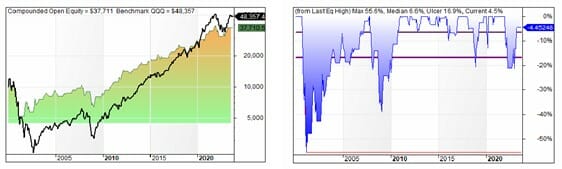
Figure 2: ETF QQQ (NASDAQ100) Performance from October to April
- Annual Return: 5,77%
- Exposure: 56.13%
- Risk Adjusted Return: 10.29%
- Max Drawdown: -55.50%
- CAR/MDD: 0.10
- Average Profit Per Trade: 7.51%
“Sell in May and go away” – the core of this strategy lies in the repeatability of historical market seasonal trends. May has often marked a turning point in the stock market, heralding the onset of a phase of increased volatility and uncertainty. Accordingly, according to this strategy, investors sell their stock holdings in May and stay away from the market, only to return after September. The idea is to avoid historically weaker months in the summer. Because capital protection should be the cornerstone of any investment strategy.
But how bad are the markets during the summer months really?
Let’s reverse our simple sell in May and go away strategy and see how holding during the summer months from May to September perform.

Figure 3: ETF SPY (S&P500) Performance from May to September
- Annual Return: 0.04%
- Exposure: 42.07%
- Risk Adjusted Return: 0.11%
- Max Drawdown: -39.22%
- CAR/MDD: 0.00
- Average Profit Per Trade: 0.66%
As you can see from the figure above, holding only during the summer months in the S&P 500 is a recipe for underperformance and extreme disappointment! Over the last 23 years holding the SPY only during the summer months has barely broken even.
The backtest results of holding the QQQ during the summer months is equally disappointing , drastically underperforming the benchmark and suffering drawdown of over 60%.

Figure 4: ETF QQQ (NADAQ100) Performance from May to September
- Annual Return: 0.56%
- Exposure: 42.37%
- Risk Adjusted Return: 1.32%
- Max Drawdown: -64.21%
- CAR/MDD: 0.01
- Average Profit Per Trade: 1.97%
A picture is worth a thousand words. This also applies to the capital curves of the ETFs SPY and QQQ. Not only is the overall return from our Sell in May and go away (but come back in September) strategy superior, but the interim losses experienced in the past, known as maximum drawdowns, are also lower. Our analysis confirms the importance of the months from October to April, which historically have often been the strongest months in the stock market. These months have seen remarkable market rallies, higher returns, and lower drawdowns.
Stockmarket Seasonality clearly beats Buy & Hold
It is worth comparing the above return risk statistics with a Buy & Hold strategy, not only the headline return and drawdown data, but also the equity charts.
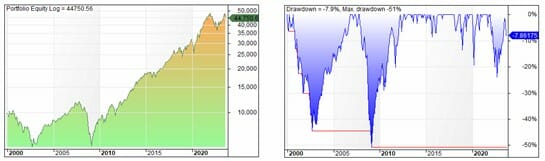
Figure 5: ETF SPY (S&P500) Performance Buy & Hold
- Annual Return: 6.51%
- Exposure: 100%
- Risk-Adjusted Return: 6.51%
- Max Drawdown: -50.64%
- CAR/MDD: 0.13

Figure 6: ETF QQQ (NASDAQ100) Performance Buy & Hold
- Annual Return: 6.57%
- Exposure: 100%
- Risk Adjusted Return: 6.57%
- Max Drawdown: -81.09%
- CAR/MDD: 0.08
Our analysis is clear. A simple investment strategy based on the winter seasonality beats Buy & Hold. With an annual return of 6.40% and a max drawdown of -41.90%, this simple strategy achieves a higher risk return adjusted profile with substantially less time in the market. Remember that this analysis did not consider money market rates on cash holdings.
For the NASDAQ100 the data gives us the same conslusion. The winter seasonality strategy beats Buy & Hold. In our analysis we find another interesting fact. Even though, the NASDAQ100 is regarded as a more promising investment, the annual return for the SP500 is the same as for the NASDSAQ100 since 2000. So be aware.
Always do you own analysis and don’t fall for the hype without checking the analysis for yourself!
The simple winter strategy is susceptible to Black Swan events
Despite their out performance, drawdowns during the winter months can still be painfully high. On the positive side, incurred losses have always been recovered in a reasonable time. This does not hold true for the summer months, where losses of -30% and more persist over two decades.
These winter drawdowns would still be emotionally difficult to endure, and premature selling is almost inevitable to all but those with the strongest trading psychology. Understanding these risk factors and historical trends is crucial for risk management. Blindly following the mantra “Sell in May” will inevitably lead to a painful surprise.
The dot.com bubble burst and the financial crisis are two typical examples of unexpected risk factors which can impact a overly simple seasonality based trading strategy such as ‘sell in May and go away’. Both events could not be more different in their nature, yet their impacts on global stock markets were similarly catastrophic and resulted in a large drawdown for our simple strategy.
Therefore, a mature approach is advisable.
Seasonality Strategy Model I: Introducing a simple regime filter
To effectively implement seasonal trading strategies, it is important to have a deep understanding of seasonal patterns as we have seen above. Equally crucial is a deep understanding of how to reduce potential losses. To navigate the complex financial world reliably and consistently over time, we need robust simple solutions.
The simplest and most powerful technical trading rule of all is the simple moving average of price from the past X months. When price is above the moving average a positive trend tends to continue upward and vice versa. This phenomenon is called momentum – a market anomaly extensively covered in scientific studies. As a rule of thumb, a calculation period of 9 to 12 months leads to a strong risk-return ratio. In our further analysis we select 12 months as for this calculation period the momentum effect is most robust (other values may be backtested and optimized to further finetune the results).
The results below demonstrate the performance from holding the SPY ETF long only during the winter months provided the S&P 500 is above the 12 month simple moving average.

Figure 7: ETF SPY (S&P500) Performance Winter & 12 month Moving Average
- Annual Return: 4.80%
- Exposure: 41.29%
- Risk Adjusted Return: 11.63%
- Max Drawdown: -19.38%
- CAR/MDD: 0.25
- Average Profit Per Trade: 7.23%
As you can see, the compound annual return has dropped substantially (now 4.8%), however more interesting is that the exposure time has dropped to just 41.29% and the Risk Adjusted Return has increased to 11.63%pa. The addition of the moving average filter also reduced drawdown dramatically to just 19.38%.
So while this strategy no longer beats buy and hold returns, the risk adjusted return is substantially improved. The same performance enhancement is evident when this new strategy is applied to the QQQ as well (see below).
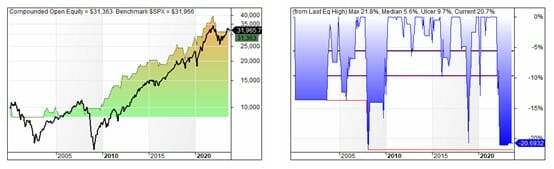
Figure 8: ETF QQQ (NASDAQ100) Performance Winter & 12 month Moving Average
- Annual Return: 5.39%
- Exposure: 36.51%
- Risk Adjusted Return: 14.75%
- Max Drawdown: -21.84%
- CAR/MDD: 0.25
- Average Profit Per Trade: 9.11%
For completeness we should also check the impact of our simple 12 month moving average filter during the summer months:
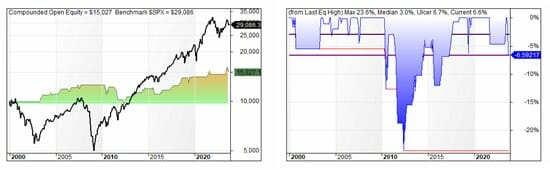
Figure 9: ETF SPY (S&P500) Performance from May to September & 12 month Moving Average
- Annual Return: 1.73%
- Exposure: 31.88%
- Risk Adjusted Return: 5.42%
- Max Drawdown: -23.58%
- CAR/MDD: 0.07
- Average Profit Per Trade: 2.50%

Figure 10: ETF QQQ (NASDAQ100) Performance from May to September& 12 month Moving Average
- Annual Return: 3.94%
- Exposure: 30.16%
- Risk Adjusted Return: 13.07%
- Max Drawdown: -17.40%
- CAR/MDD: 0.23
- Average Profit Per Trade: 6.03%
Clearly, we can see that such a simple regime filter improves the risk return profile not only for the winter seasonality, but also for the summer months. Fairly remarkable is the percentage rate of winning trades for the winter seasonality strategy combined with the regime filter. With a rate of 75% of winning trades, the strategy demonstrates some very robust characteristics.
Seasonal trading is a niche within long-term investing. Hence, we need entry points that align with the character of long-term investing. Our simple approach meets these requirements. To summarize the rules of this model: In the period from October to April, a long position is opened when the index is above its 12-month average. This procedure is reviewed monthly. If the index falls below its moving average, the position is sold at the end of the month.
Seasonality Strategy Model II: Taking advantage of past behavior in risky environments
Reducing losses is easier than you think. Another approach to implementing proper risk management is to capitalize on historical drawdown patterns. From a psychological perspective, it makes sense that investors become increasingly irrational after a certain loss. This results in higher uncertainty, which in turn increases the likelihood of larger losses. We can use this recurring behavior to our advantage. In our analysis, we consider a loss of -15% from the peak of the last 12 months. Once this condition is met, we sell our position at the end of the month during the winter months. The process is done on a monthly basis. We also included the results for the summer months.

Figure 11: ETF SPY (S&P500) Performance Winter & -15% Drawdown from its 12 months Highest High
- Annual Return: 5.17%
- Exposure: 43.72%
- Risk Adjusted Return: 11.83%
- Max Drawdown: -19.39%
- CAR/MDD: 0.27
- Average Profit Per Trade: 7.32%
This strategy provides a slight enhancement to the return profile from our earlier strategy of buying during winter months when the index is above the 12 month moving average.
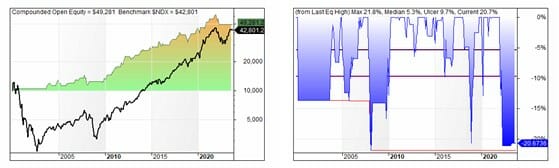
Figure 12: ETF QQQ (NASDAQ100) Performance Winter & -15% Drawdown from its 12 months Highest High
- Annual Return: 6.70%
- Exposure: 43.79%
- Risk Adjusted Return: 15.29%
- Max Drawdown: -21.82%
- CAR/MDD: 0.31
- Average Profit Per Trade: 9.42%
Again, simple risk management tool can improve the risk return profile of the winter seasonality strategy. Whereas the regime filter approach also enhances the summer months, the current managing risk tool shows ambiguous results for the summer months. Overall, we can say, that both approaches improve the simple seasonality strategy.
Seasonality incorporating risk management is the key
In this comprehensive exploration of stock market seasonality and trading strategies, we’ve uncovered a wealth of insights to empower investors and traders in their pursuit of success. At the heart of this journey is the recognition that the stock market is not a monolithic entity but follows a rhythm that mirrors the changing seasons. Understanding these seasonal patterns can be a game-changer for anyone seeking to navigate the dynamic world of finance effectively.
If you want a shorter term seasonality based trading system that can generate profitable trades weekly, check out our Turnaround Tuesday article here to discover how you can find profitable trades on an almost weekly basis!
Frequently Asked Questions about Stock Market Seasonality
What is the seasonality of the stock market?
The stock market’s seasonality refers to the recurring patterns and trends that repeat throughout the year, much like the changing seasons in nature. These patterns are shaped by historical returns, economic events, and human behavior, offering traders potential edges .
- Monthly Trends: Certain months consistently show strong performance, like October and November, while others, such as September, are often more volatile or stagnant .
- Winter Strategy: Historically, the winter months (October to April) have been strong for the US stock market, offering returns comparable to a buy-and-hold strategy but in a shorter time frame .
- Sell in May: This strategy suggests selling stocks in May and returning after September to avoid historically weaker summer months .
- Santa Claus Rally: Stocks often rise towards the end of the year, continuing through to just after Christmas, providing a seasonal edge .
Understanding these seasonal patterns can help traders adjust their strategies to capitalize on favorable periods while being cautious during challenging times.
What is the worst month for stocks?
September is historically considered the worst month for stocks. This pattern, known as the “September Effect,” is observed across various global stock market indices, including the NASDAQ100. It’s characterized by a clear pattern of weakness, making it a challenging month for stock performance .
The reasons behind this trend aren’t entirely clear, but it might be linked to factors like tax-loss selling or portfolio rebalancing by institutional investors. Despite this historical trend, it’s crucial to remember that past performance doesn’t guarantee future results. Traders should use this information as part of a broader strategy, ensuring they have confirmation rules in place to avoid relying solely on historical averages .
Which month is the best month to buy stocks?
The winter months, particularly October and November, are historically strong for the US stock market. These months have consistently shown positive trends and robust gains, making them favorable periods for buying stocks . The strategy of being invested from October to April has been shown to achieve similar annual returns as a buy-and-hold approach, but in only half the time, due to the strong performance during these months .
This period includes the “Santa Claus Rally,” where stocks tend to rise towards the end of the year through to just after Christmas. This seasonal effect can provide a strong edge for traders who align their strategies accordingly .
What are the most volatile months in the stock market?
The most volatile months in the stock market typically include September and June. September is known for its historical weakness, often marked by volatility and underperformance across various global stock market indices, including the NASDAQ100 . June, on the other hand, has also been associated with periods of stagnation or losses, contributing to its reputation for volatility .
These months can present challenges for traders, but understanding these patterns allows for strategic adjustments to capitalize on favorable periods and exercise caution during more turbulent times.
Is October good for stocks?
October is indeed considered a good month for stocks. Historically, it’s one of the stronger months in the stock market, showing consistent positive trends and robust gains . This period marks the beginning of the winter months, which are seasonally strong for the US stock market. By being invested from October to April, traders can achieve similar annual returns as a buy-and-hold strategy but in only half the time .
The positive performance in October is part of a broader seasonal pattern that savvy traders can exploit. If you’re looking to align your trading strategy with these seasonal trends, October is a promising time to consider entering the market .
What are the two worst months for stocks?
The two worst months for stocks are historically September and June. September is widely recognized for its pattern of weakness, showing underperformance across various global stock market indices, including the NASDAQ100 . June, on the other hand, has been marked by volatility, stagnation, or even losses, contributing to its reputation as a challenging month for stock performance .
Understanding these seasonal patterns allows traders to adjust their strategies, potentially capitalizing on favorable periods while exercising caution during these historically weaker months.
Which month is best for stocks?
October and November are historically strong months for stocks. These months have consistently shown positive trends and robust gains, making them favorable periods for buying stocks . The strategy of being invested from October to April has been shown to achieve similar annual returns as a buy-and-hold approach, but in only half the time, due to the strong performance during these months .
This period includes the “Santa Claus Rally,” where stocks tend to rise towards the end of the year through to just after Christmas. This seasonal effect can provide a strong edge for traders who align their strategies accordingly .
Is it better to sell stocks in December or January?
The decision to sell stocks in December or January can depend on several factors, including tax considerations and market trends. December is often associated with tax-loss selling, where investors sell underperforming stocks to offset capital gains, potentially creating buying opportunities for others . This can lead to a temporary dip in stock prices, which might recover in January.
On the other hand, the “Santa Claus Rally,” which typically occurs during the last five trading days of December and the first two trading days of January, often results in a positive market sentiment and rising stock prices . Selling in January might allow you to benefit from this rally, potentially achieving higher prices.
Ultimately, the choice between December and January should consider your specific tax situation, investment goals, and market conditions. If you’re looking to optimize your strategy based on these seasonal trends, it might be worth analyzing your portfolio and consulting with a financial advisor to make an informed decision.
Which month has the most stock market crashes?
October is notably infamous for stock market crashes. The month has witnessed several significant market downturns, including the notorious Black Monday on October 19, 1987, when the Dow Jones Industrial Average plummeted by 22.61% in a single day . This crash was part of a broader decline that saw the market drop over 40% from peak to trough in just nine weeks . The 1987 crash wasn’t just a one-day event, it was preceded by heavy selling earlier in the month, setting the stage for the panic conditions that culminated on Black Monday .
This pattern of volatility in October has led to the month being associated with market instability, earning it a reputation for being a challenging period for stocks.
Which months are bad for trading?
September and June are historically challenging months for trading. September is widely recognized for its pattern of weakness, showing underperformance across various global stock market indices, including the NASDAQ100 . June, on the other hand, has been marked by volatility, stagnation, or even losses, contributing to its reputation as a challenging month for stock performance .
Understanding these seasonal patterns allows traders to adjust their strategies, potentially capitalizing on favorable periods while exercising caution during these historically weaker months.
What is the September curse in the stock market?
The “September curse” in the stock market refers to the historical pattern of underperformance during the month of September. This phenomenon is observed across various global stock market indices, including the NASDAQ100, where September has consistently been the weakest trading month . The pattern is characterized by a clear dip in performance, making it a challenging period for traders.
The reasons behind this recurring trend are not entirely clear, but it could be influenced by factors such as tax-loss selling, portfolio rebalancing, or even psychological factors among investors. Despite the uncertainty, the persistence of this pattern provides an opportunity for systematic traders to potentially exploit it by adjusting their strategies accordingly.
Do stocks go down in October?
October is actually known for being a strong month for stocks, not a weak one. Historically, October and November have shown positive trends and robust gains, making them favorable periods for buying stocks . This is in contrast to September, which is typically the weakest trading month, showing a clear pattern of underperformance across various global stock market indices, including the NASDAQ100 .
The strength of October is part of a broader seasonal trend where the months from October to April tend to perform well, often achieving similar annual returns as a buy-and-hold strategy but in only half the time . This period includes the “Santa Claus Rally,” where stocks tend to rise towards the end of the year through to just after Christmas .
Does seasonality work in trading?
Seasonality can indeed work in trading, offering traders a potential edge by capitalizing on recurring patterns and trends throughout the year. These patterns, much like the changing seasons in nature, provide insights into the ebb and flow of market behavior . For instance, the “Santa Claus Rally” is a well-known seasonal effect where stocks tend to rise towards the end of the year through to just after Christmas, providing a strong enough edge that traders can build a system around it .
However, it’s important to approach seasonality with a systematic mindset. A systematic approach helps remove guesswork, allowing traders to profit from these patterns without falling into the trap of overreacting to short-term fluctuations . By understanding and leveraging these seasonal trends, traders can improve their probability of success, but it’s crucial to combine this with other strategies to mitigate risks and avoid overfitting .
Do stocks go up in December?
December is indeed a month where stocks often experience a rise, thanks to the phenomenon known as the “Santa Claus Rally.” This rally typically occurs during the last five trading days of December and the first two trading days of January, characterized by a surge in stock prices . The rally is driven by positive market sentiment, holiday spending, year-end bonuses, and tax considerations, creating a favorable environment for stock gains .
The Santa Claus Rally is a seasonally-driven event, with its distinctive timing and historical performance trends making it a prime investment opportunity . While it’s not guaranteed, the rally has shown positive returns more often than not, making it a strong enough edge for traders to build a system around it .
Which months are best for stocks?
The months from October to April are historically strong for stocks, often outperforming the rest of the year. This period includes the “Santa Claus Rally,” where stocks tend to rise towards the end of the year through to just after Christmas . During these months, the market has shown remarkable rallies, higher returns, and lower drawdowns compared to the summer months .
April, July, October, and November have consistently proven to be strong performers, characterized by robust gains and optimism . In contrast, September and June have been marked by volatility, stagnation, or even losses . The strategy of being invested only during the winter months from October to April can achieve a similar annual return as a buy-and-hold strategy but in only half the time .
Is the end of the year a good time to buy stocks?
The end of the year can indeed be a favorable time to buy stocks, thanks to the “Santa Claus Rally.” This phenomenon typically occurs during the last five trading days of December and the first two trading days of January, characterized by a surge in stock prices . The rally is driven by positive market sentiment, holiday spending, year-end bonuses, and tax considerations, creating a favorable environment for stock gains .
The Santa Claus Rally is a seasonally-driven event, with its distinctive timing and historical performance trends making it a prime investment opportunity . While it’s not guaranteed, the rally has shown positive returns more often than not, making it a strong enough edge for traders to build a system around it .
If you’re interested in exploring how to leverage this seasonal trend in your trading strategy, feel free to ask! Sorry, not sure about that one. Please ask your question in the Course Forum and one of our real human coaches will get back to you.
Learn The 10 Commandments For Profitable Trading
Discover the 10 most important lessons from 18 years of profitable trading & reading over 150 trading books.

Get your FREE Report & 10 Training Videos NOW!