SMSF Contribution Limits and Retirement Planning
Superannuation is one of the most powerful wealth-building tools available, especially if you’re running your own Self-Managed Super Fund (SMSF). But to take full advantage, you need to know the rules. From understanding concessional vs non-concessional contributions to mastering strategies and transitioning into the pension phase, every decision counts.
In this article, we break down SMSF contribution caps, current ATO limits, and what happens if you exceed them. You’ll also learn strategies to boost your retirement savings, including splitting contributions, downsizer strategies, and investment adjustments tailored to pre-retirees. And when the time comes to retire, we’ll guide you through starting a pension, meeting drawdown requirements, and structuring your portfolio for consistent income.
Whether you’re still in accumulation mode or planning your retirement drawdown strategy, this guide will help you stay compliant, tax-effective, and fully in control of your SMSF.
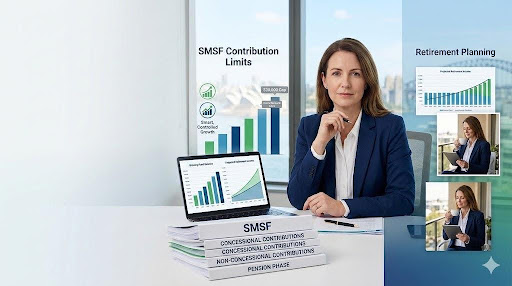
Contribution Types and Limits Explained
Concessional vs non-concessional contributions
Concessional contributions are before-tax contributions to your SMSF. These include employer contributions, salary sacrifice, and personal contributions for which you claim a tax deduction. They’re taxed at 15% in the fund, which is often lower than your marginal tax rate, making them an efficient way to grow your super if you’re still working.
Non-concessional contributions are made from after-tax income and aren’t taxed when entering the fund, because you’ve already paid tax on them. These are useful for boosting your super balance once you’ve maxed out your concessional cap. If you’ve recently sold an asset or received an inheritance, this can be a powerful way to inject extra funds.
The main difference lies in tax treatment and the caps that apply. The smart play is often a blend of both, depending on your income, tax position, and how close you are to retirement.
Current ATO caps and indexation
As of the 2025–26 financial year, the concessional contribution cap is $30,000 per year, while the non-concessional cap is $120,000 per year. If your total super balance is under $2 million, you may also be eligible to use the bring-forward rule to contribute up to $360,000 over three years.
These caps are indexed periodically by the ATO, which means they can increase over time with inflation. It’s important to check the limits each financial year, especially if you’re planning a large contribution or using a multi-year strategy.
Being proactive with contributions now can give your investments more time to compound. Even small annual increases in your caps can translate into significant long-term growth if used effectively.
What happens if you exceed limits
Exceeding the concessional or non-concessional caps can lead to unwanted tax consequences. For concessional breaches, the excess is added to your personal income and taxed at your marginal rate, plus an excess contributions charge. For non-concessional breaches, the ATO may direct your fund to return the excess, along with earnings.
You’ll have options, but they come with complexity. For example, you can elect to withdraw the excess and associated earnings, but these earnings will be taxed at your marginal rate. Leave it in the fund and you may pay 47% tax on the excess amount.
Planning ahead is essential. Even automated salary sacrifice arrangements can cause breaches if they aren’t adjusted for pay increases or bonus payments.
Strategies for Growing Your SMSF Before Retirement
Contribution timing and splitting
Timing your contributions is crucial. Making large contributions late in the financial year may leave no room for error, especially if other transactions (like bonuses) push you over the cap. Spreading contributions throughout the year makes it easier to monitor and adjust.
Contribution splitting allows you to transfer up to 85% of your concessional contributions to your spouse’s super account. This is useful if your spouse has a lower balance or is younger, helping with equalisation and tax planning in retirement.
For some couples, this can improve flexibility and give the household more control over how and when pensions are drawn in the future.
Downsizer contributions
If you’re aged 55 or older and have sold your main residence, you may be eligible to make a downsizer contribution of up to $300,000 per person (or $600,000 per couple) into your SMSF. This doesn’t count towards your non-concessional cap.
This strategy is a powerful way to boost your super later in life, especially if you haven’t hit the total super balance limit yet. It’s also attractive for those who didn’t get the chance to contribute large amounts earlier in their career.
Just make sure the property qualifies and you contribute within 90 days of settlement. Timing and documentation are key, as mistakes can nullify your eligibility.
Investment strategies tailored to pre-retirees
As you approach retirement, your investment strategy should start shifting from aggressive growth to capital preservation with income generation. This doesn’t mean going all-in on cash or bonds, but it does mean managing volatility carefully.
Pre-retirees often benefit from a “bucket strategy”, allocating funds into short, medium, and long-term buckets to handle income needs while allowing other assets to grow. Systematic trend trading or mean reversion strategies can be applied in a way that balances risk and return while supporting gradual drawdown.
It’s also smart to regularly reassess your risk tolerance. As retirement nears, the emotional cost of drawdowns often outweighs the potential upside of aggressive trades.
Transitioning to Pension Phase
When and how to start drawing a pension
You can start drawing a retirement phase pension once you reach preservation age (between 55 and 60 depending on your birth year) and have met a condition of release. The most common is retirement or turning 65.
Once you start a pension, your SMSF enters the pension phase, and assets supporting the pension become tax-free, including earnings and capital gains. This can be a huge benefit if managed well.
You’ll need to notify your administrator, update your investment strategy, and keep clear records. Transitioning correctly ensures you don’t miss out on valuable tax benefits or trigger compliance issues.
Minimum drawdown requirements
Each year, the ATO requires a minimum percentage withdrawal based on your age and pension balance. These drawdown rates start at 4% for ages 65–74 and increase with age. During COVID, the government temporarily halved these, but normal rules now apply again.
Failing to meet your drawdown obligation can result in the pension being treated as accumulation phase, which means losing the tax-free earnings status. That’s a painful mistake for something that can be planned easily.
It’s best to schedule withdrawals early in the financial year and review them before June to ensure compliance. If your investments are volatile, hold enough liquid assets to fund withdrawals without having to sell at a bad time.
Structuring investments to support regular income
Income planning in the pension phase is about consistency, liquidity, and low drawdown risk. Your SMSF should hold a mix of assets that generate income (like dividend stocks, ETFs, or fixed interest) alongside some growth for long-term capital needs.
Using a diversified, rules-based approach can also help manage sequencing risk, which is the danger of drawing income during a market downturn. Strategies that blend trend following and income yield can provide smoother cash flow while still growing your nest egg over time.
The key is to match your income needs with your portfolio structure. A well-structured SMSF doesn’t just grow wealth, it supports life after work, reliably.
Summary: Contribution Strategies and Pension Planning for SMSF Success
Making the most of your SMSF starts with understanding how much you can contribute, and when. From concessional limits to non-concessional strategies like the bring-forward rule, staying within ATO caps while building your fund efficiently is a balancing act. Add in the downsizer contribution opportunity, and there’s serious potential for growth.
Once you’re nearing retirement, it’s not just about growth, it’s about preserving capital and creating reliable income. Your strategy should evolve, using techniques like bucket investing, trend-based systems, and diversified income assets to meet ATO pension phase requirements and avoid compliance headaches.
With the right planning, your SMSF can become a streamlined, tax-effective engine that grows your wealth and funds your lifestyle after work. The key is knowing the rules, using the strategies, and making every dollar count.
Read our complete set of articles on Self Managed Super Fund Trading
SMSF Setup and Compliance
- SMSF vs Industry and Retail Super Funds: What’s Right for You?
- ATO Rules and Audit Requirements for SMSF Traders
- SMSF Contribution Limits and Retirement Planning
- SMSF Compliance and Trustee Responsibilities
- How to Set Up a Self-Managed Super Fund for Stock Trading
SMSF Benefits and Considerations
SMSF Trading
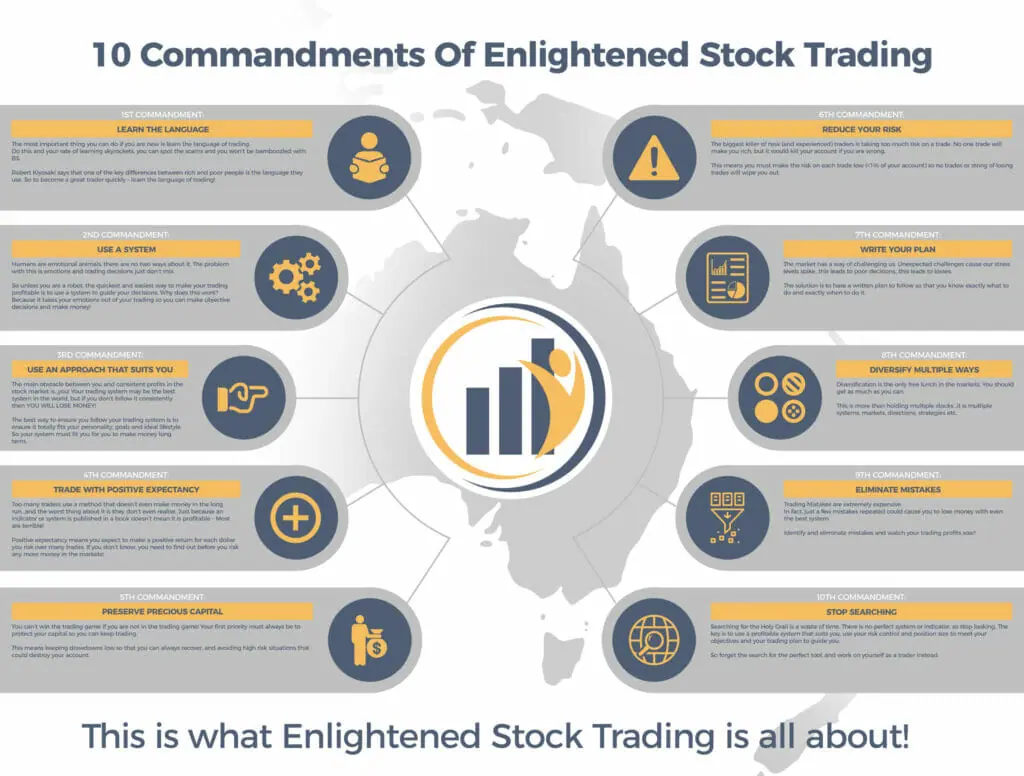
Learn The 10 Commandments For Profitable Trading
Discover the 10 most important lessons from 18 years of profitable trading & reading over 150 trading books.
Get your FREE Report & 10 Training Videos NOW!