Best Tools for Managing an SMSF Trading Portfolio
When you trade stocks through a Self-Managed Super Fund (SMSF), it’s not just about performance, it’s about precision, documentation, and control. That’s why serious SMSF traders rely on the right tools to develop, test, and automate their trading systems, while staying compliant with ATO regulations.
From strategy development in Amibroker or RealTest and clean historical data via Norgate, to broker integration with Interactive Brokers and spreadsheet-based portfolio tracking, every piece of the puzzle matters. With the right setup, your trades aren’t just profitable they’re explainable, repeatable, and auditable.
In this guide, you’ll discover how to use professional-grade platforms to build robust trading strategies, automate execution, track performance, and stay 100% audit-ready. Whether you’re just starting with systematic trading or looking to streamline your SMSF workflow, this article shows you how to trade smarter, with confidence and control.

Strategy Development and Backtesting Tools
RealTest features and benefits
RealTest is built for serious system developers who want institutional-grade accuracy without unnecessary complexity. It gives SMSF traders full transparency and control over their strategies, from entry and exit rules to capital allocation, exposure limits, and risk management. There are no black-box shortcuts. Every rule is explicitly defined, so your trading system reflects your personal risk tolerance, objectives, and long-term wealth plan.
One of RealTest’s biggest advantages is its robust portfolio-level backtesting engine. You’re not just analysing individual trades, you’re modelling how a complete portfolio of strategies performs over decades of market history. RealTest accurately simulates position sizing, capital constraints, slippage, commissions, and competing signals, allowing you to see how systems interact in real-world conditions. This gives SMSF investors’ confidence that their strategy is resilient, not just profitable in isolation.
For SMSF investors, auditability and record-keeping are critical. RealTest makes it easy to export detailed trade logs, performance reports, and equity curves into spreadsheet format. You can clearly document system rules, performance metrics, and risk controls, making it simple to explain your approach to your accountant, auditor, or future self. You’re not just building returns, you’re building a disciplined, well-documented investment process.
Data quality from Norgate
Garbage in, garbage out. If your trading system is running on flawed or incomplete data, it doesn’t matter how clever the logic is—it’s destined to mislead. Norgate delivers the most reliable EOD data available for ASX, Canadian and US stocks, including corporate actions, dividends, and historical index constituency data.
A standout feature for SMSF traders is Norgate’s ability to include delisted stocks. This matters when you’re backtesting a long-term system. Companies come and go, and excluding the failures paints a false picture of performance. Norgate helps you build systems that would’ve survived, not just in theory, but in practice.
With seamless integration into RealTest or Amibroker, Norgate lets you test ideas fast, often in seconds. You can load custom watchlists, work with clean sector data, and even track index constituents over time. It’s the foundation of any serious SMSF trading strategy
Avoiding survivorship bias
Survivorship bias is the trap of only testing strategies on stocks that still exist today. But what about the ones that failed along the way? Ignoring those means your backtest is unfairly optimistic, which can be dangerous in a long-term SMSF portfolio.
For example, a strategy that looks brilliant on today’s ASX 200 might have struggled in real time because in live trading, it would’ve traded companies that went bankrupt or were delisted or simply were removed from the index. If those aren’t included in your historical testing, your results are fiction. That’s why survivorship bias must be eliminated at the data level.
Norgate and RealTest together help you avoid this by simulating the actual stocks available at the time, including delisted companies. It’s the only way to know if your system has true edge, not just hindsight polish.
Execution Platforms and Brokers
Interactive Brokers for SMSFs
Interactive Brokers (IB) supports SMSFs with a dedicated structure that keeps your trust compliant while giving you direct market access. That means you can trade globally, US, ASX, HK, TSX and countless other markets, all from one account, with tight spreads and low fees.
The real edge for systematic traders is how IB integrates with trade automation tools. You can link your Amibroker or RealTest signals directly to IB for streamlined execution. This reduces delays and errors while ensuring your SMSF strategy runs exactly as tested.
IB also offers advanced reporting features that help at tax time. Whether it’s realized gains, dividend income, or trade confirmations, everything can be exported into formats your accountant will love, helping reduce audit stress and improve financial clarity. The annual process of supplying my accountant with all required documentation from Interactive Brokers is consistently efficient and seamless.
Integrating brokers with trading systems
Manual execution introduces human error. Delays, second-guessing, fat-finger trades (Before automating, a decimal point in the wrong place has cost me a lot of money!) they all creep in when you’re placing orders by hand. Integrating your trading system with your broker is the next step toward clean, consistent execution.
RealTest offers many options from basket trader to full automation through OrderClerk to make this workflow efficient and accurate. This allows your SMSF system to move from signal generation to trade placement without needing you to intervene.
This integration gives you something critical, repeatability. If your system says to buy X shares of Stock Y today, you can be confident the trade will be executed precisely, with no bias or second-guessing. That’s essential when trading for retirement wealth inside an SMSF.
Automation considerations
Automation isn’t about taking your hands off the wheel, it’s about eliminating decision fatigue. Start by automating your signal generation with Amibroker or RealTest, then progress to automated order placement through broker APIs or third-party tools.
The key is gradual implementation. Don’t jump to full automation on day one. Instead, automate one system, monitor the results, and build trust. Once that’s stable, scale up to a full portfolio. This gives you control while reducing screen time.
You must also think about fail-safes. What happens if your broker API fails? What if the data is corrupted? Have you built in stop losses, capital allocation rules, and alerts? In an SMSF, automation must be reliable and recoverable to maintain compliance.
Portfolio Tracking and Record Keeping
Using spreadsheets (Excel, Google Sheets)
Even the most advanced traders still use Excel or Google Sheets for tracking. Why? Because they offer flexibility. You can quickly summarise portfolio returns, track dividends, manage franking credits, or monitor your cash balance all in one place.
For SMSF traders, spreadsheets help with compliance. You can document your investment strategy, log your system parameters, and keep track of trading activity for audits. You don’t need to rely on your memory or sift through broker statements.
Many systematic traders also use spreadsheets to review performance. By importing daily equity values or monthly P&Ls from Amibroker or RealTest, you can see how each strategy contributes to your overall wealth-building plan. It’s simple, fast, and effective.
Performance metrics and compliance
It’s not just about “did I make money?” In an SMSF, you must also track how you made it. Metrics like drawdown, win/loss rate, Sharpe ratio, and equity curve smoothness help demonstrate that your strategy is sound, not just lucky.
Auditors and trustees need evidence. Make sure you monitor your allocations, diversification, risk management, and capital efficiency. RealTest’s detailed reports and spreadsheet exports make this easy to track and present.
These metrics also help you refine your systems. If a strategy has great returns but unbearable drawdowns, it’s a compliance risk. Better to spot that early and tweak the rules than face stress during your next annual audit.
Exporting data for audits
When audit season rolls around, traders with clean systems breathe easy. RealTest lets you export trade histories, portfolio equity, system rules, and even charts. Combine that with your spreadsheet logs and Interactive Brokers summary and you’ve got everything your accountant needs.
This level of record-keeping protects your SMSF. If ever questioned, you can demonstrate that your investment strategy is documented, rules-based, and aligned with your trust deed. That puts you miles ahead of those still trading by gut.
Exporting also builds personal clarity. Having a record of trades, changes to your systems, and your ongoing results helps you grow as a trader. Your audit trail becomes your learning trail, and your edge gets sharper every year.
Summary: Build Smarter, Compliant SMSF Trading Systems with the Right Tools
Systematic SMSF trading starts with the right foundations: powerful tools like RealTest or Amibroker for strategy design, accurate Norgate data to avoid survivorship bias, and integrated brokers like Interactive Brokers for clean execution. It’s not just about building a good system, it’s about running it with repeatability, transparency, and compliance.
Manual mistakes and emotional decisions have no place in your retirement portfolio. With automation, proper record-keeping, and performance tracking in place, you’ll protect your capital, reduce admin stress, and make audit time simple.
As an SMSF trustee, you’re in charge of performance and compliance. These tools give you the structure to handle both. Build with purpose, execute with precision and document everything, because your long-term wealth deserves a long-term edge.
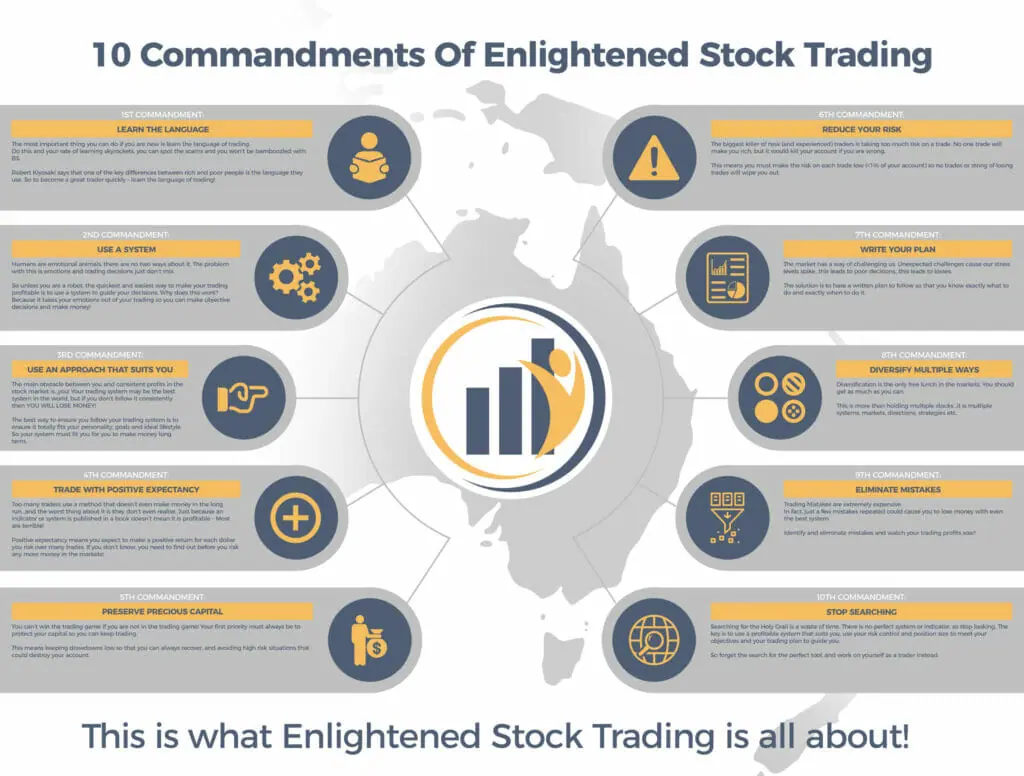
Learn The 10 Commandments For Profitable Trading
Discover the 10 most important lessons from 18 years of profitable trading & reading over 150 trading books.
Get your FREE Report & 10 Training Videos NOW!