MetaTrader 4 VS MetaTrader 5: Comparing Backtesting Software for Systematic Trading
MetaTrader 5 is better suited for systematic traders than MetaTrader 4, thanks to its faster backtesting engine, multi-threaded performance, and improved strategy development environment. However, both fall short of serious backtesting platforms like RealTest if your goal is deep portfolio-level simulation and robust system design.
If you’re trading based on rules, not hunches, the right trading software matters. Let’s break down the key differences between MT4 and MT5 so you can decide which (if either) belongs in your systematic trading toolkit.
MetaTrader 4 VS MetaTrader 5 at a Glance:
Short on time? Here’s how MetaTrader 4 VS MetaTrader 5 compare side by side.
|
Feature |
MetaTrader 4 (MT4) |
MetaTrader 5 (MT5) |
|
Year Released |
2005 |
2010 |
|
Platform Compatibility |
Windows, iOS/Android apps |
Windows, Web, iOS/Android, macOS via web |
|
Programming Language |
MQL4 (C-like, simpler) |
MQL5 (C-like, more powerful) |
|
Strategy Backtesting |
Single-threaded |
Multi-threaded |
|
Portfolio Backtesting |
Not supported |
Limited multi-symbol testing |
|
Strategy Optimization |
Basic |
Advanced, genetic algorithm supported |
|
Charting & Indicators |
Extensive |
Extensive (with some improvements) |
|
Data Access |
Broker-dependent |
Broker-dependent |
|
Automation Support |
Full (via Expert Advisors) |
Full (via Expert Advisors) |
|
Best Use Case |
Simple automated trading |
More advanced strategy development |
Platform Overview, Cost & Compatibility
Both MetaTrader 4 and MetaTrader 5 are free-to-use platforms provided by brokers. Neither requires a licensing fee from traders. However, the underlying tech stack differs.
- MT4 runs on Windows and has mobile apps. Mac users can access it via Parallels or other VMs, though Wine is not recommended due to stability issues.
- MT5 adds web-based and macOS compatibility through the browser terminal and better mobile app support.
For systematic traders, MT5’s broader compatibility and updated architecture make it a better fit for modern workflows.
MetaTrader 4 Main View:
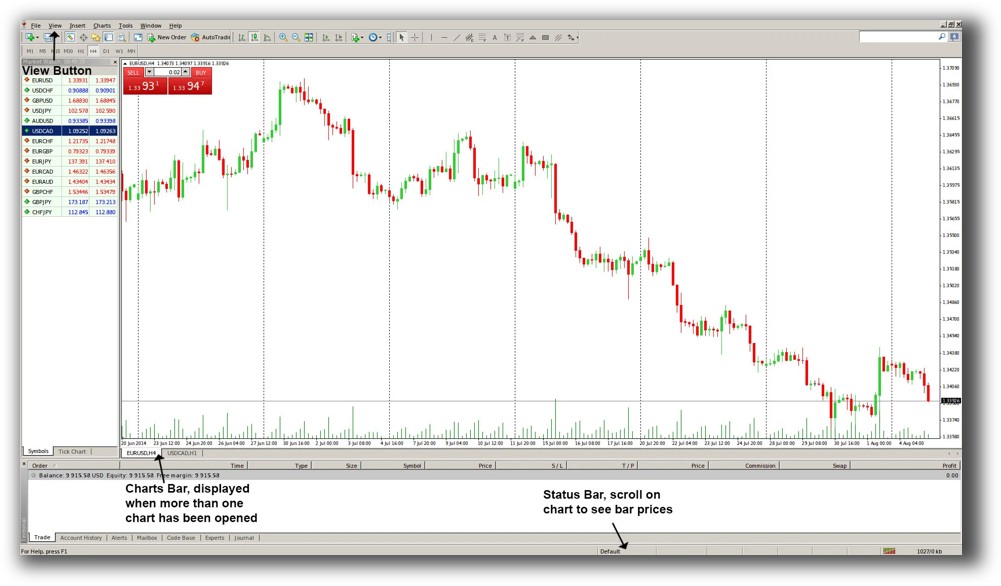
MetaTrader 5 Main View:

Market Access & Data Support in MetaTrader 4 VS MetaTrader 5
Both platforms rely entirely on your broker for data. You don’t get clean historical datasets or full market depth unless your broker provides them.
- MT4 is typically used for forex and CFDs.
- MT5 supports a broader range of asset classes including stocks, futures, and options depending on the broker.
So while market access isn’t limited by the software itself, your broker’s offering defines your actual trading universe.
MetaTrader 4 Backtesting Interface:
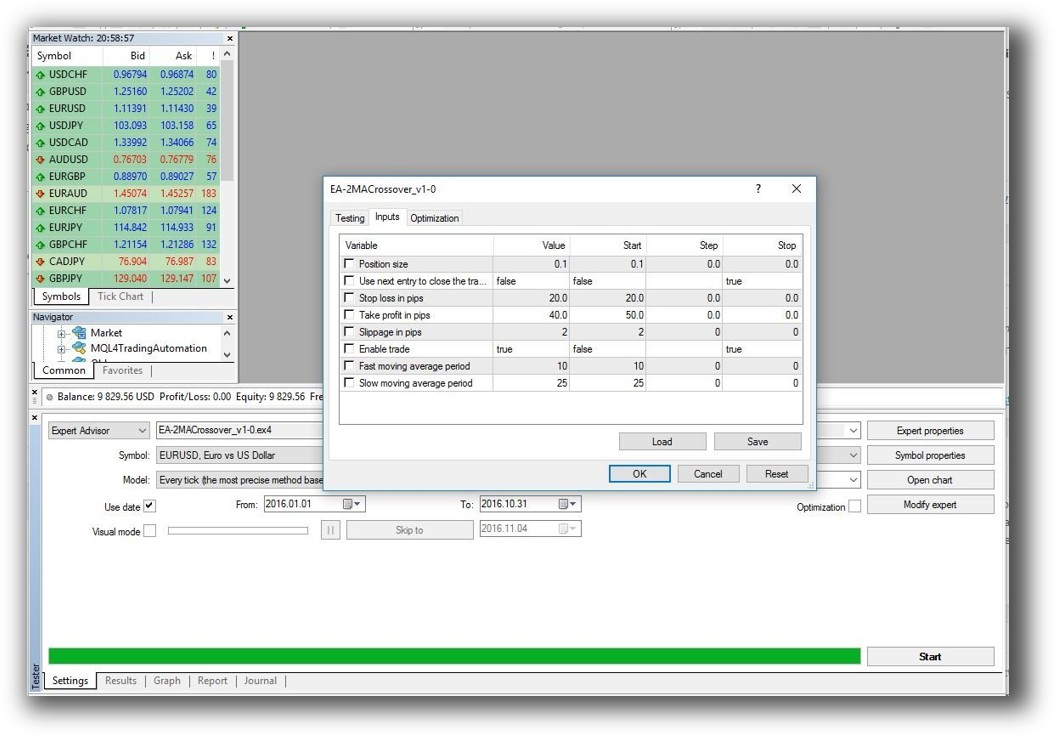
MetaTrader 5 Backtesting Interface:

Building & Customizing Trading Strategies
This is where the gap widens.
- MT4 uses MQL4, which is simpler but more limited. Good for basic Expert Advisors (EAs), but clunky for portfolio-level logic or advanced modeling.
- MT5 uses MQL5, which is more powerful, supports OOP (Object Oriented Programming), and is closer to a full development environment
If you’re serious about building and refining your own trading algorithms, MT5 offers a more flexible coding environment.
Check Out: Trading System Development
MetaTrader 4 Code Editor:

MetaTrader 5 Code Editor:

Backtesting Performance, Speed & Realism
- MT4’s backtesting engine is outdated. It’s single-threaded and lacks realism. Testing one strategy at a time is slow and doesn’t account for slippage or order queue dynamics well.
- MT5 introduced multi-threaded backtesting, which significantly speeds up testing and allows multi-currency strategies. However, it’s still not true portfolio-level backtesting like you get in RealTest.
MT5 is the clear winner here, but if realism and portfolio simulation are your top priorities, MT5 still falls short of tools purpose-built for backtesting.
Check out: Backtesting | Drawdown
MetaTrader 4 Backtest Report:
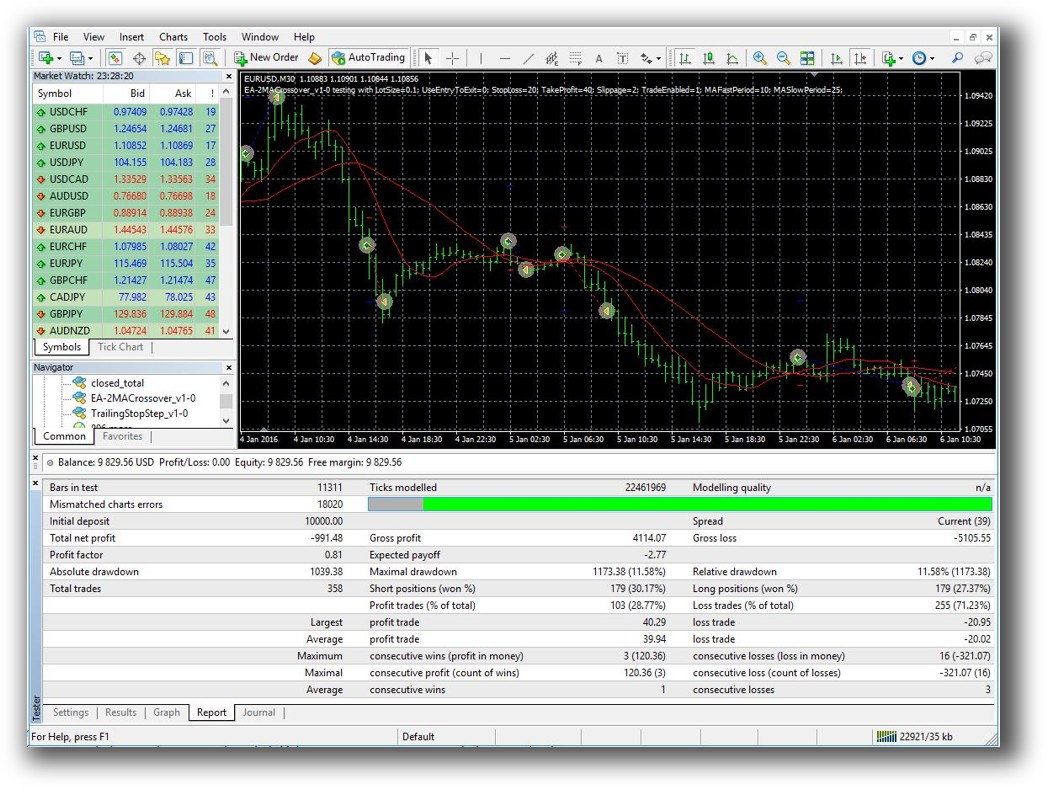
MetaTrader 5 Backtest Report:

Strategy Optimization & Stress Testing Tools
- MT4 supports brute force optimization. It gets the job done but is slow and lacks statistical insight.
- MT5 adds support for genetic algorithms and cloud optimization, which improves speed and result variety.
Still, neither MT4 nor MT5 gives you the kind of robustness testing systematic traders really need (e.g., Monte Carlo simulations, parameter sensitivity, walk-forward testing). For that, you’d need RealTest or tools like AmiBroker.
MetaTrader 5 Genetic Optimization:

Charting Features, Signal Exploration & Live Execution
- Both platforms offer rich charting and hundreds of indicators. You can build visual templates, custom studies, and launch trades directly from charts.
- Scanning is limited, especially for equities traders. There’s no robust market scanner unless you build it yourself in code.
- Execution is seamless through integrated broker connections, which is a plus.
If visual analysis and manual execution are part of your workflow, either platform works well. For scanning and system-driven execution, MT5 offers more flexibility, but again, you’re capped by the broker.
Check Out Order Types | Automated Trading Systems
MetaTrader 4 Automation Set Up:
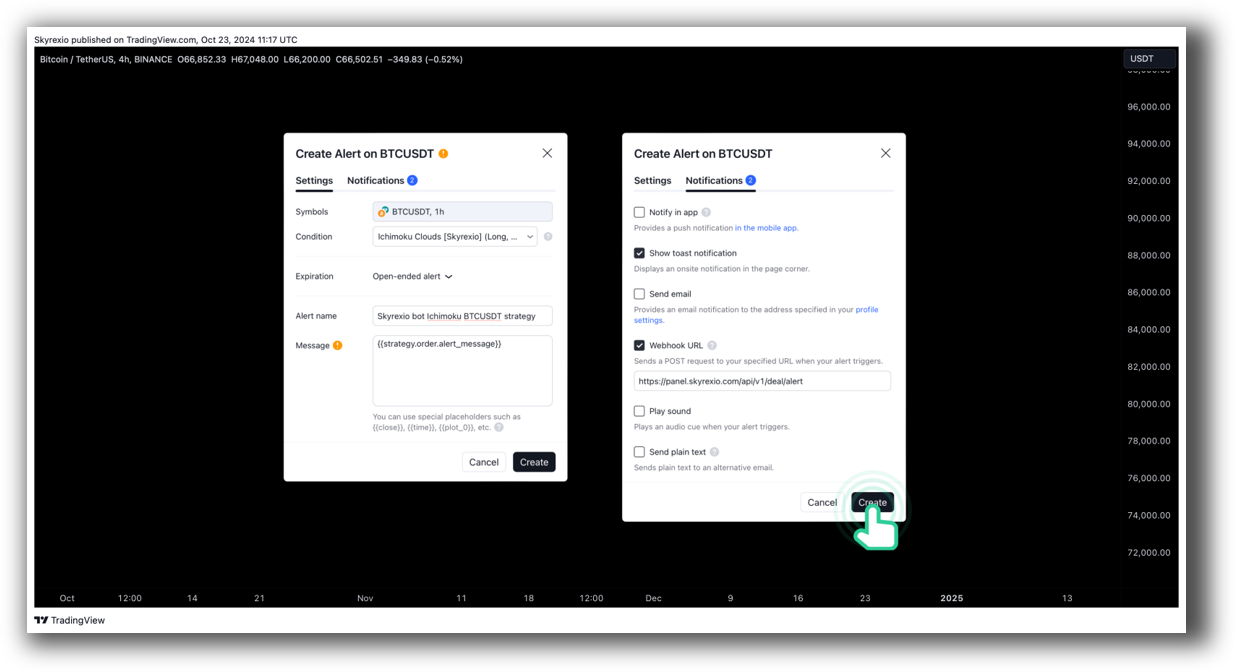
MetaTrader 5 Automation Set Up:

Support, Documentation & Learning Resources
- MT4’s documentation is mature but aging. Plenty of community support and YouTube tutorials, but many are outdated or inconsistent.
- MT5’s resources are newer and more developer-focused. MetaQuotes’ documentation has improved, and there’s a growing ecosystem of developers.
Still, neither platform comes close to the clarity and structure offered by RealTest’s documentation, which is built specifically for systematic traders.
MetaTrader 4 Forum Front Page is illustrated down below:
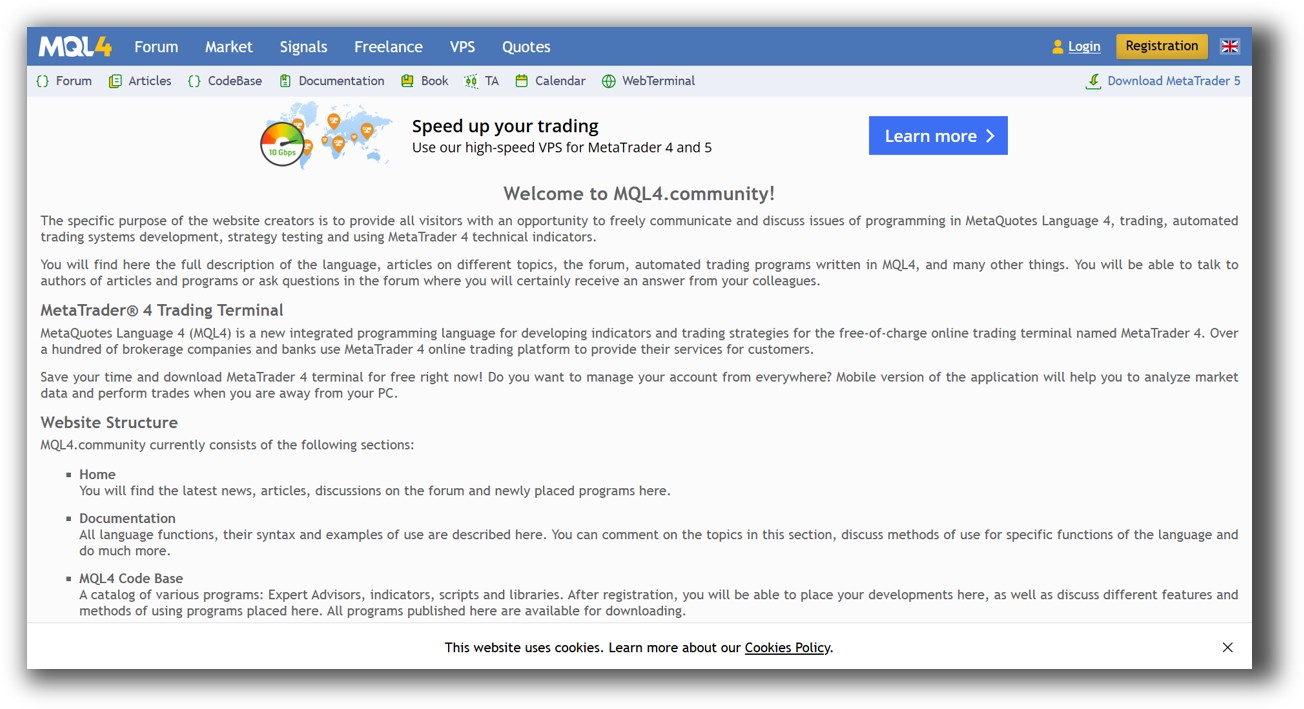
MetaTrader 5 Forum Front Page is illustrated down below:

MetaTrader 4 VS MetaTrader 5: Which One Should You Use?
MetaTrader 5 is the better choice for systematic traders who want more speed, flexibility, and multi-symbol testing. Its modern architecture and MQL5 language make it more powerful for strategy development.
MetaTrader 4 is only worth using if your broker doesn’t support MT5, or if you’re maintaining legacy strategies.
But both fall short if your goal is professional-grade backtesting and systematic strategy design. That’s where RealTest or AmiBroker clearly take the lead.
Our Recommendation
If you’re serious about becoming a consistent, confident systematic trader, neither MT4 nor MT5 should be your main backtesting software.
You can use MT5 for basic live automation with your broker, but pair it with RealTest for fast, realistic backtesting and strategy development. That combo gives you execution flexibility and system-building power.
If charting is a big part of your process, consider AmiBroker or TradingView as supplementary tools – but avoid using MT4/MT5 as your sole research platform.
Want The Rest of the Puzzle?
Backtesting software is just one piece. The real transformation happens when you align your tools, your systems, and your psychology with your goals.
If you’re tired of chasing tips and want to build wealth systematically, the next step is clear: The Trader Success System.
Inside, you’ll discover:
- Proven trading systems
- A step-by-step backtesting framework
- Position sizing tools
- Automation strategies that let you trade in 30 minutes or less
Trading and Backtesting Software Review List
- RealTest vs Amibroker
- RealTest VS TradeStation
- RealTest VS NinjaTrader
- RealTest VS MultiCharts
- RealTest VS Wealth-Lab
- RealTest VS Beyond Charts
- RealTest VS Optuma
- RealTest VS TradingView
- RealTest VS MetaTrader 4 (MT4)
- RealTest VS MetaTrader 5 (MT5)
- AmiBroker VS TradeStation
- AmiBroker VS NinjaTrader
- AmiBroker VS MultiCharts
- AmiBroker VS Wealth-Lab
- AmiBroker VS Beyond Charts
- AmiBroker VS Optuma
- AmiBroker VS TradingView
- AmiBroker VS MetaTrader 4 (MT4)
- AmiBroker VS MetaTrader 5 (MT5)
- TradeStation VS NinjaTrader
- TradeStation VS MultiCharts
- TradeStation VS Wealth-Lab
- TradeStation VS Beyond Charts
- TradeStation VS Optuma
- TradeStation VS TradingView
- TradeStation VS MetaTrader 4 (MT4)
- TradeStation VS MetaTrader 5 (MT5)
- NinjaTrader VS MultiCharts
- NinjaTrader VS Wealth-Lab
- NinjaTrader VS Beyond Charts
- NinjaTrader VS Optuma
- NinjaTrader VS TradingView
- NinjaTrader VS MetaTrader 4 (MT4)
- NinjaTrader VS MetaTrader 5 (MT5)
- MultiCharts VS Wealth-Lab
- MultiCharts VS Beyond Charts
- MultiCharts VS Optuma
- MultiCharts VS TradingView
- MultiCharts VS MetaTrader 4 (MT4)
- MultiCharts VS MetaTrader 5 (MT5)
- Wealth-Lab VS Beyond Charts
- Wealth-Lab VS Optuma
- Wealth-Lab VS TradingView
- Wealth-Lab VS MetaTrader 4 (MT4)
- Wealth-Lab VS MetaTrader 5 (MT5)
- Beyond Charts VS Optuma
- Beyond Charts VS TradingView
- Beyond Charts VS MetaTrader 4 (MT4)
- Beyond Charts VS MetaTrader 5 (MT5)
- Optuma VS TradingView
- Optuma VS MetaTrader 4 (MT4)
- Optuma VS MetaTrader 5 (MT5)
- TradingView VS MetaTrader 4 (MT4)
- TradingView VS MetaTrader 5 (MT5)
- MetaTrader 4 (MT4) VS MetaTrader 5 (MT5)