“I’m just hitting the 18-month mark and I’d say I’m break even. I’ve lost a lot of money.”
That is a real line from a real trader on a call with me. Eighteen months of screens, charts, courses and early mornings, and the scoreboard reads zero. Actually worse than zero, because the time is gone too.
If you are asking “is day trading easy?”, you probably already suspect the answer. Maybe you have watched a YouTube video where someone turns $500 into a fortune before breakfast. Maybe you have tried it yourself and had a few good days, followed by a few very bad ones.
This article gives you the straight answer, the numbers behind it, and the approach I have used for more than 25 years instead: rules-based, end-of-day systematic trading that takes 20 to 30 minutes a day.
Is Day Trading Easy?
No. Day trading is easy to start and very hard to do profitably. Opening an account and clicking “buy” takes five minutes. Making money after costs, year after year, is something only a tiny fraction of day traders ever achieve. The largest studies of real brokerage data show that fewer than 1 in 100 day traders earn a reliable profit after fees.
The problem is the gap between how easy it looks and how hard it is. The platform is slick, the charts are colourful, and every trade feels like a skill test you could pass with a bit more practice. Underneath that, you are playing a game with thin margins, high costs and professional opponents who have better tools than you.
That does not mean trading is impossible. It means day trading, done by hand, by a person with a job and a normal life, is one of the hardest ways to try.
Why Is Day Trading So Hard?
Day trading is hard because it combines small profits per trade, high costs, fast decisions under pressure and professional competition. Any one of those is manageable. All four together are brutal.
Costs eat most of your edge
Every trade costs you commission and slippage on the way in and on the way out. When your average winning move is small, those costs become a huge share of it.
Here is the maths. Say a day trader pays 0.25% in slippage and commission per trade, and their average profit per trade is 0.5%. Half of the gross profit is gone before anything else goes wrong.
Now compare a position trader holding for one to two weeks with an average profit of around 5% per trade. The same 0.25% cost is only 5% of the gross profit.
| Day trader | End-of-day position trader | |
|---|---|---|
| Average profit per trade | 0.5% | 5% |
| Round-trip cost (slippage + commission) | 0.25% | 0.25% |
| Share of profit lost to costs | 50% | 5% |
With the same broker and the same costs, the day trader hands ten times more of their profit to the broker. If you want to see how much slippage does to real results, read Slippage in Trading: Why Your Live Results Will Never Match Your Backtest.
You are competing against machines
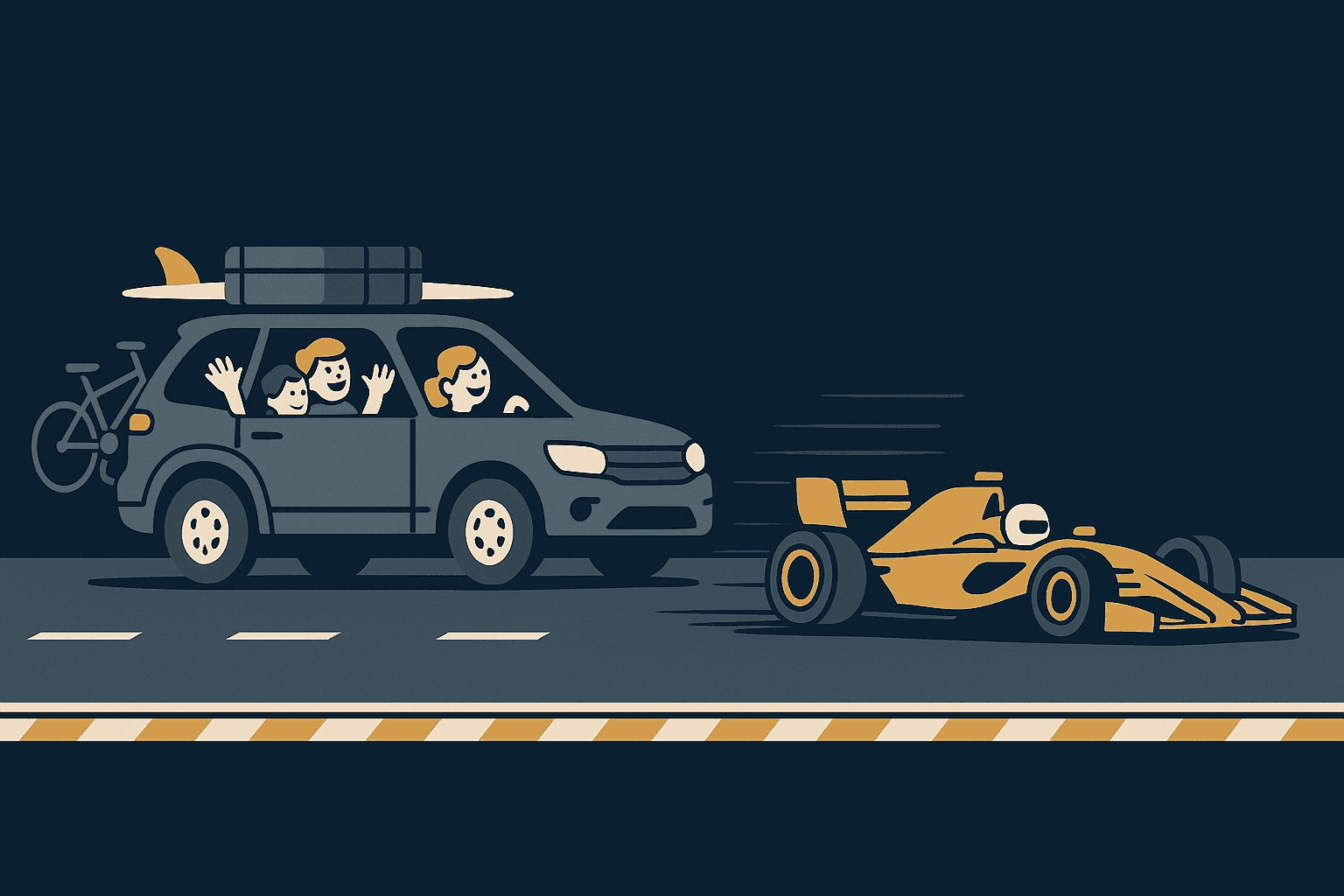
At very short timeframes you are up against high-frequency trading firms, market makers and hedge funds. They have co-located servers, direct market access, better data and teams of PhDs. They are not trying to beat the market by a little. They are trying to take a small slice from people who trade the way you do.
A private trader cannot win a speed race with those firms. Trying to is like entering a Formula 1 race in the family car.
Every decision is made under pressure
Day trading asks you to make dozens of decisions a day, in real time, with money moving in front of you. That is exactly when your judgement is worst.
Fear makes you exit winners too early. Hope makes you hold losers too long. A loss makes you want to “win it back” on the next trade. One prospect described the feeling perfectly: “Not with that brain always poking you. Have you done this right? Is this the right decision? I’m tired of that nonsense.”
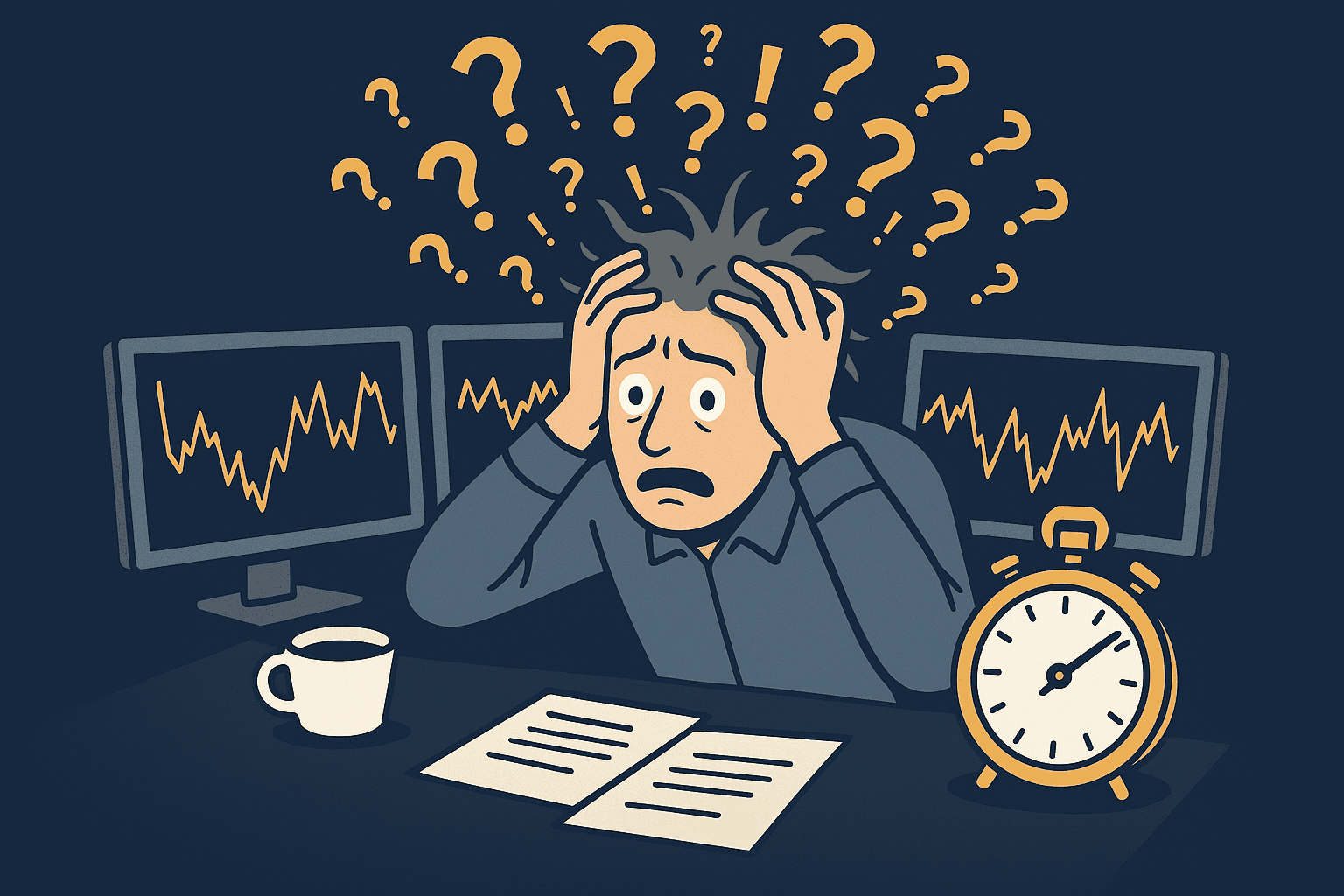
This is why trading psychology becomes such a big deal for day traders. They are trying to fix an emotional problem with willpower, when the real fix is to stop making decisions under pressure in the first place.
The noise is louder than the signal
Over a few minutes, price movement is mostly random noise. Over weeks and months, real trends and real patterns have room to show up. The shorter your timeframe, the more of what you see is noise, and the harder it is to tell whether your method has any real edge.
It eats your life
Day trading needs you at the screen during market hours. If you have a job, a business or a family, that is a direct conflict. Most people who try it discover they do not actually want the lifestyle once they have lived it for a few months.
What Do The Studies Say About Day Trader Success Rates?
The research on real traders’ accounts is consistent: the overwhelming majority of day traders lose money, and only around 1% earn a reliable profit.
| Study | Market | Finding |
|---|---|---|
| Barber, Lee, Liu and Odean | Taiwan Stock Exchange (full market data over many years) | Fewer than 1% of day traders were able to predictably profit after fees |
| Chague, De-Losso and Giovannetti (2019) | Brazilian mini-index futures | 97% of people who day traded for more than 300 days lost money. Only 1.1% earned more than the Brazilian minimum wage |
| US regulators (SEC / Investor.gov) | US equities | Warn that most individual day traders suffer severe financial losses in their first months |
Look closely at the Brazil study. These were not people who dabbled for a week and quit. They persisted for more than 300 trading days. Persistence did not save them: after more than a year of trading, 97 out of 100 were still behind.
Why does this matter to you? Because the usual advice is “just practise harder”. The data says practice alone does not fix a method that has no edge after costs.
Is Day Trading Easy To Learn?
The mechanics are easy to learn. The profitable part is not. You can learn what a market order is, how to read a chart and how to set a stop in a weekend. What takes years, and what most people never achieve, is a method with a measurable edge that survives costs.
Here is the hidden trap. Most day trading is discretionary. You watch the chart, you read the setup, you decide. That means there are no fixed rules to test. You cannot backtest “it looked like it was going to break out”. So you never find out whether your approach works until you have spent real money finding out.
That is how people end up where one trader described themselves to me: “Big study effort, still no trades.” Or worse, lots of trades and no progress.
A systematic trader learns in a completely different order. First you write objective rules. Then you backtest them over years of historical data, including costs. Only when the numbers prove there is an edge do you risk real money. The learning happens on historical data, not on your account.
Is It Easy To Make Money Day Trading?
No. Making money day trading requires an edge that is bigger than your costs, applied with near-perfect discipline, over hundreds of trades. Very few people have all three.
To make money in any form of trading, your system needs positive expectancy: the average amount you make per trade, after winners, losers and costs, has to be above zero. Day trading makes this harder in two ways:
- Costs are a bigger share of each trade, as the table above shows. A method that looks profitable before costs can be a loser after them.
- Discretionary decisions are inconsistent. The same setup gets a different decision depending on your mood, your last trade and what someone said on social media that morning. Your real expectancy ends up worse than your “best day” expectancy.
You can run your own numbers through the free Trading Expectancy Calculator. Put in a realistic win rate, average win, average loss and costs, and you will quickly see how thin the margin is at short timeframes.
Why Does Day Trading Look So Easy?
Day trading looks easy because you only see the winners. The people posting screenshots of big days are a self-selected handful. The thousands who quietly lost money and closed their accounts do not post anything.
A few other things make it look easier than it is:
- Early wins. A few lucky trades early on feel like skill. One prospect named it well: “I didn’t know what I didn’t know… And that inflated my confidence in a dangerous way, especially if you get a few good wins under your belt.” This is a classic case of blind spot bias.
- Selling courses pays better than trading. Plenty of people teaching day trading make most of their money from the commissions and kickbacks they get from the dodgy brokers they introduce you to. I trade with Interactive Brokers because they are super cheap and cover a wide range of markets – not because they pay me huge commissions to recommend them (unlike pretty much all CFD brokers, who pay insane commissions to educators who recommend them). I have never taken a single dollar in commissions from a broker.
- Gamified apps. Confetti, streaks and push notifications make trading feel like a game. It is a game with real money and a house edge built in through costs.
- Short memories. A strong bull market makes almost any buying strategy look clever. The method only gets tested when conditions change.
Can You Day Trade With A Full-Time Job?
Realistically, no. Day trading needs you watching the market during market hours, which is when most people are at work. Checking your phone between meetings means making fast decisions half-distracted, and taking worse fills because you acted late.
There is also a capital hurdle in the US. FINRA’s pattern day trader rule has long required a minimum of $25,000 in a margin account if you make four or more day trades within five business days. The rule has been under review, so check the current requirement with your broker, but most day trading still assumes a meaningful account and a lot of free time.
Compare that with my own path. I built my trading while working full-time as a business strategy consultant working 60+ hours a week. In 2006 I handed my wife Stephanie a written trading plan and went trekking in Nepal for a month while my systems kept running. That is only possible when the decisions are made by rules, not by someone staring at a screen.
What Is The Alternative To Day Trading?
The alternative is end-of-day systematic trading: you trade from daily data using objective rules that have been backtested, and you place your orders after the market closes. There is nothing to watch during the day.
Here is what my daily routine looks like:
- Download the end-of-day data after the market closes.
- Run the systems to generate buy and sell signals. This takes about 30 seconds per system.
- Place the orders with the broker for the next session.
- Close the computer.
That takes 20 to 30 minutes a day. I run more than 15 systems across multiple markets, in a seven-figure account, inside that same window. It takes the same time whether the account is $10,000 or $10 million.
| Day trading (discretionary) | End-of-day systematic trading | |
|---|---|---|
| Time needed | Hours during market hours | 20-30 minutes after the close |
| Decisions made | Live, under pressure | In advance, when designing the rules |
| Can you test it before risking money? | Rarely – rules are not written down | Yes – every rule is backtested |
| Costs as a share of profit | High | Low |
| Competition | HFT firms and market makers | Far less crowded; funds cannot trade many small-cap edges |
| Fits a full-time job? | No | Yes |
| Scales with account size? | Poorly | Same time at $10k or $10m |
Holding periods in end-of-day systems range from a couple of days (short-term mean reversion) to months (trend following). If you want the middle ground, read Position Trading: The Complete Guide for Stock Traders.
How Do You Start With End-Of-Day Systematic Trading?
You start by writing your goals, turning an idea into objective rules, and testing those rules on quality historical data before any real money is involved. Here is the order I teach:
- Set your goals first. Decide what return you want and how big a drawdown you can live with. The goal shapes the system, not the other way around.
- Write objective rules. Entry, exit, position size and which stocks qualify. If two people read the rules and could make different decisions, the rules are not finished.
- Backtest on quality data, including costs. Use survivorship-bias-free data and realistic slippage and commission. A result that “excludes slippage and commission” is meaningless for real trading.
- Size positions properly. Position sizing decides whether a bad run is a dip or a disaster.
- Write a trading plan. Your plan covers what you do every day, what you do in a drawdown and what would make you stop a system.
- Execute the routine and follow the rules. 20 to 30 minutes a day. The system makes the decisions; your job is to carry them out.
For the full picture of how the pieces fit together, start with Trading Systems.
Is Systematic Trading Easy Then?
It is easier to live with, and it is still work. The difference is where the hard part sits.
In day trading, the hard part happens every day, live, in front of the screen. In systematic trading, the hard part happens up front: learning to design and test a system properly. After that, the daily work is simple and mostly mechanical.
The one part that stays hard is following your rules during a drawdown, when every instinct tells you to switch the system off. That is easier when you have backtested evidence showing that drawdowns like this one have happened before and the system recovered. Confidence comes from the data, and confidence is what lets you stay consistent.
If you want to see what day trading is like from the inside, I recorded a short video on it: What Daytrading Is Really Like.
Frequently Asked Questions
Is day trading easy for beginners?
No. Beginners face the highest costs relative to their account size, have no tested method, and are most exposed to emotional mistakes. Studies of real brokerage data show fewer than 1% of day traders earn a reliable profit after fees. Beginners are better served learning to build and backtest a rules-based end-of-day system first.
Why do 90% of day traders lose money?
Most day traders lose because their costs are large compared with their small average profit per trade, they compete against faster professional firms, and their discretionary decisions change with their emotions. Without tested rules, they have no way of knowing whether their method has an edge until they have lost money finding out.
Can I day trade with $100?
You can open an account with $100 in many places, but costs and minimum trade sizes make it very hard to profit, and in the US the pattern day trader rule has long required $25,000 in a margin account for frequent day trading. A small account is better used learning systematic end-of-day trading, where costs take a much smaller share of each trade.
How long does it take to learn day trading?
Learning the mechanics takes days. Becoming consistently profitable takes most people years, and most never get there. Research on Brazilian day traders found that 97% of those who kept going for more than 300 days still lost money, so time on its own does not solve the problem.
Is day trading gambling?
Day trading without tested rules behaves a lot like gambling: outcomes are mostly random over short timeframes, and costs act like a house edge. Trading becomes a business when you have objective rules with positive expectancy, proven on historical data, and you follow them consistently.
What is easier than day trading?
End-of-day systematic trading is easier to live with. You make your decisions in advance using backtested rules, place orders after the close, and spend 20 to 30 minutes a day on it. It fits around a full-time job, and costs are a much smaller share of each trade.
Stop Fighting The Screen
If you have tried day trading and felt the stress, the inconsistency and the time drain, you are in the same position as almost everyone who tries it. The approach produces those results for most people, whatever their intelligence or effort.
There is a calmer way to trade. Objective rules, tested on historical data, executed in a few minutes after the market closes, so trading fits around your life instead of taking it over.
Want to see how it works in practice? Watch the free 10-Minute Trading Formula training, where I show how to trade the markets in as little as 10 minutes a day using a rules-based approach.
Ready to build your own systems with guidance? The Trader Success System takes you step by step from your goals to a portfolio of backtested trading systems you can run in minutes a day, with coaching along the way.
Remember – You are only one trading system away!